Flat moss or cushion moss for a layered wall piece
Building a layered moss wall piece starts with a choice that shapes the whole look: which type of preserved moss to use as the base. The two most common options are flat moss, often sold as sheet moss, and cushion moss, sometimes called pillow moss or mound moss. Each brings a different texture, depth, and practical quality to the project. Knowing how they differ helps you decide which one fits your design and the spot where the piece will hang.
What flat moss offers
Flat moss grows low and dense, forming a thin, carpet-like layer. When preserved, it keeps a soft, velvety surface that lies close to the backing. For a layered wall piece, flat moss works well as the background or the "filler" between more sculptural elements. It covers large areas evenly and gives a calm, consistent texture that does not compete with other materials.
One practical advantage of flat moss is how easily it attaches to a wood frame or other rigid backing. Because it is thin and pliable, it conforms to curves and corners without leaving gaps. You can cover a whole panel with flat moss in a single layer and still keep the overall piece shallow, which matters if the final artwork will hang in a tight space like a hallway or behind a door.
Flat moss also tends to be more forgiving when you cut it. You can trim it into irregular shapes or narrow strips to fit around other preserved elements such as reindeer moss or larger accent pieces. The finished edge stays clean, so you can butt pieces together without obvious seams.
Color variation in flat moss is generally subtle. Most preserved flat moss stays in the green to olive range, with some batches showing hints of brown or yellow. If your design relies on a uniform green backdrop, flat moss is a reliable choice. For a piece that will sit in a room with neutral walls and simple furniture, that quiet background helps the more textured parts of the artwork stand out.
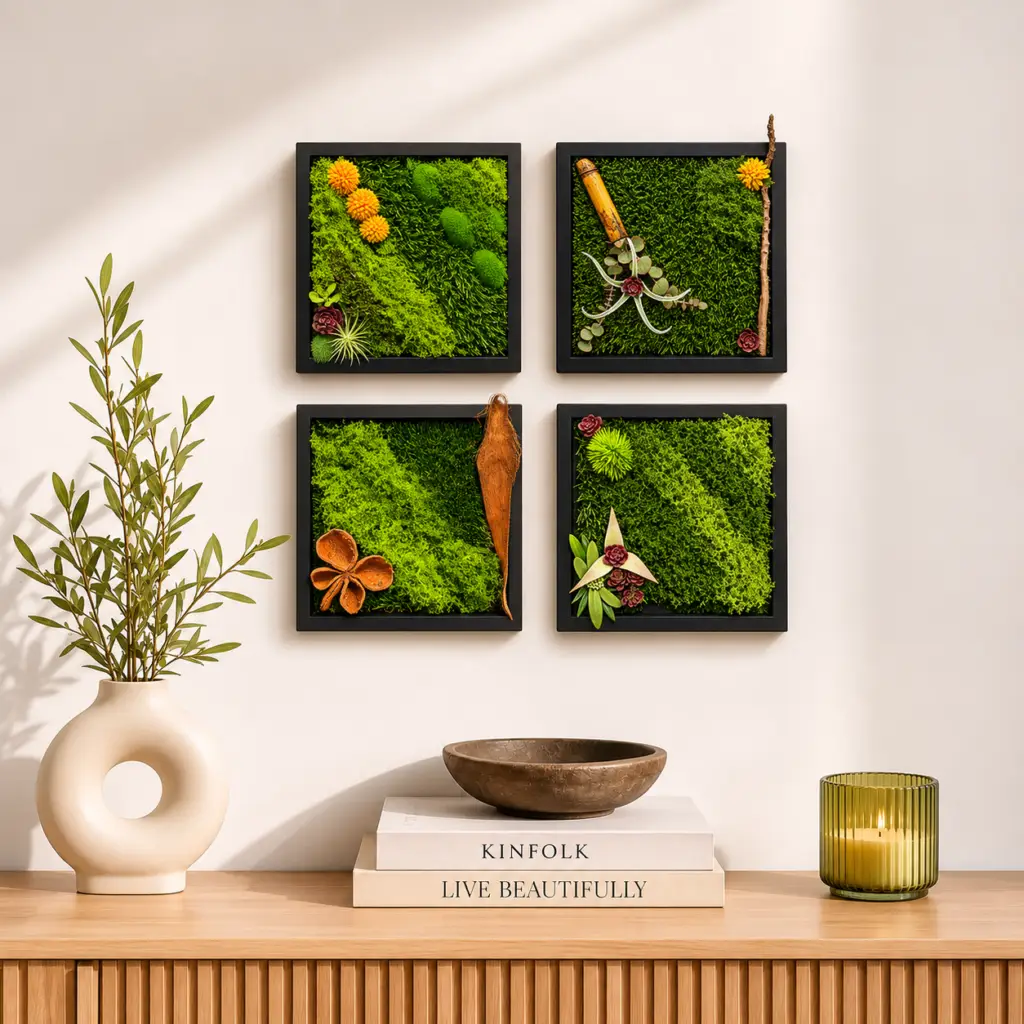
What cushion moss brings
Cushion moss grows in rounded, dome-like clumps. When preserved, each clump retains its three-dimensional shape, rising above the surface. This gives a wall piece depth and a more organic, spongy feel. Cushion moss is the go-to option when you want a pronounced texture that catches light and casts small shadows.
Because cushion moss is thicker, it takes more effort to attach securely. You usually need a generous amount of adhesive, and you may have to press each clump into place for a few seconds to get good contact. The payoff is a surface that looks like a natural moss colony, with peaks and valleys that invite touch (though preserved moss should not be handled roughly, as pieces can break off).
For a layered wall piece, cushion moss works best as an accent or a secondary layer. You can place a few clumps over a flat moss base to create contrast, or cluster several cushion moss pieces together to form a raised central feature. The variation in height makes the piece feel alive and less flat, which suits a living room or a reception area where you want the artwork to draw attention.
Color options for cushion moss are wider than for flat moss. Many suppliers offer cushion moss in greens, but also in muted yellows, rust tones, and even bleached shades. If your wall piece is meant to match a specific color palette, cushion moss gives you more flexibility. You can mix warm and cool tones in the same piece without losing the natural look.
How they compare in practice
When you set flat moss and cushion moss side by side, the first difference you notice is thickness. Flat moss sits maybe a quarter of an inch above the backing. Cushion moss can rise an inch or more. That difference changes how you plan the composition. If you want a smooth, minimalist look, flat moss alone may be enough. If you want something that feels like a cross-section of a forest floor, cushion moss is essential.
Coverage also differs. A given area of flat moss uses less material than the same area of cushion moss, because cushion moss has air gaps between the clumps. For a large piece, flat moss is more economical in terms of volume. Cushion moss, being bulkier, goes further visually but less far in square footage. A good approach is to buy flat moss for the base and cushion moss for the highlights, so you get the best of both without overspending on either.
Maintenance is similar for both types. Preserved moss needs no water or light, but it does need stable humidity and no direct sun. Over time, dust may settle in the crevices of cushion moss more than on the smooth surface of flat moss. A soft brush or a gentle puff of compressed air cleans both types without damaging them.

When each option suits the design
Flat moss is the better choice when you need a uniform background or when the wall piece will include many other elements like wood slices, dried flowers, or preserved reindeer moss. Its low profile keeps the focus on those accents. It also works well in shallow frames where every fraction of an inch matters.
Cushion moss suits designs that rely on texture as the main visual interest. If the piece will hang in a spot where people pass close, like an entryway or a corridor, the raised clumps catch light and create a dynamic surface that changes throughout the day. Cushion moss also helps fill gaps in a layered composition where flat moss alone would look too even.
For many projects, the best result comes from combining both. A base of flat moss gives a solid, even field, while scattered cushion moss adds pockets of depth. That combination is common in professional preserved moss art because it balances visual richness with practical ease of assembly. You can adjust the ratio depending on how bold or subtle you want the final piece to be.
Practical tips for working with both
If you are assembling a layered wall piece at home, start by laying out the flat moss first. Attach it to your wood frame or backing board using a preservation-safe adhesive, pressing it down until it sticks evenly. Let it set for a few hours before adding cushion moss on top. When you place the cushion moss, work from the center outward, and use small clumps to fill edges and corners last.
Cut both types of moss with sharp scissors or a craft knife. Flat moss cuts cleanly; cushion moss may shed small pieces, so cut over a tray or a sheet of paper to catch the debris. You can repurpose the loose bits as filler in gaps later.
Color matching between the two types can be tricky because flat moss and cushion moss may come from different species and preservation processes. If you want a unified look, buy both from the same source and ask for samples first. If you prefer contrast, that difference becomes a design feature rather than a problem.
For a wall piece that will hang in a room with bright indirect light, both types hold their color well. Avoid placing the artwork in direct sun, which can fade even preserved moss over time. Also avoid damp areas like bathrooms without ventilation, as humidity can encourage mold on the backing even if the moss itself is preserved.

Making the final decision
Choosing between flat moss and cushion moss is not a matter of one being better than the other. It is about what your design needs. Flat moss gives you a clean, even canvas. Cushion moss gives you depth and character. A single piece of preserved moss art can use both to create layers that feel natural and intentional.
Think about where the piece will live. In a calm, minimalist interior, a flat moss panel with just a few cushion moss accents may be enough. In a room with more texture and color, a heavier use of cushion moss can hold its own against patterned wallpaper or bold furniture. The beauty of working with preserved moss is that you can experiment with small sections before committing to the full layout.
Whichever route you take, the key is to let the natural qualities of each moss type guide your hand. Flat moss is your steady foundation; cushion moss is your expressive layer. Together they turn a flat board into a miniature landscape that brings a piece of the outdoors inside.